.webp)
.webp)
November 28, 2025
The 'Guilt-Free' Trap: From Fast Fashion to Second hand Overconsumption
Listen to the Audio Deep Dive
"Secondhand shopping is the best!" "It's a treasure, not just an old thing!" "I find unique pieces, save money, and save the planet!"
Sound familiar? Of course it does!
And you know what? It's all completely true. We at Aloto love our secondhand purchases. It's genuinely smart, economical (a great way to save money!), and a much more eco-friendly way to shop for clothes. It's a win-win, right?
But... let's be honest. You open your closet. And it's... overflowing. Stuffed with things you've worn maybe once. It's this weird mix of 'ethical' thrift stores finds and, yeah, that impulsive fast fashion order from one of those fast fashion brands last week.
So what's going on? If we've all become such smart, 'conscious' shoppers, why isn't the fundamental problem of overconsumption going away? Why are our wardrobes still bursting at the seams, and why does the global mountain of textile waste keep growing, impacting the environment around the world?
We've all gotten used to thinking that secondhand shopping automatically means we're buying fewer new clothes. It's just logical, right?
Well, a recent study published in Nature just shed some light on that very assumption, and the findings are a real cold shower. The data suggests that for many of us, secondhand shopping doesn't replace new purchases. It supplements them.
People who are highly active in the secondhand market also tend to be highly active buyers of new clothing (often driven by the low prices of fast fashion brands).
Why? Because we haven't actually changed our shopping habits. We've just transferred our fast fashion consumer behavior — the impulsivity, the trend-chasing, the hunt for a bargain, the short garment lifespan — to a different marketplace. The core issue with a lot of second hand clothing now is that the sheer speed of consumption — driven by the rapid production cycles we've all been trained to expect — hasn't slowed down for most consumers.
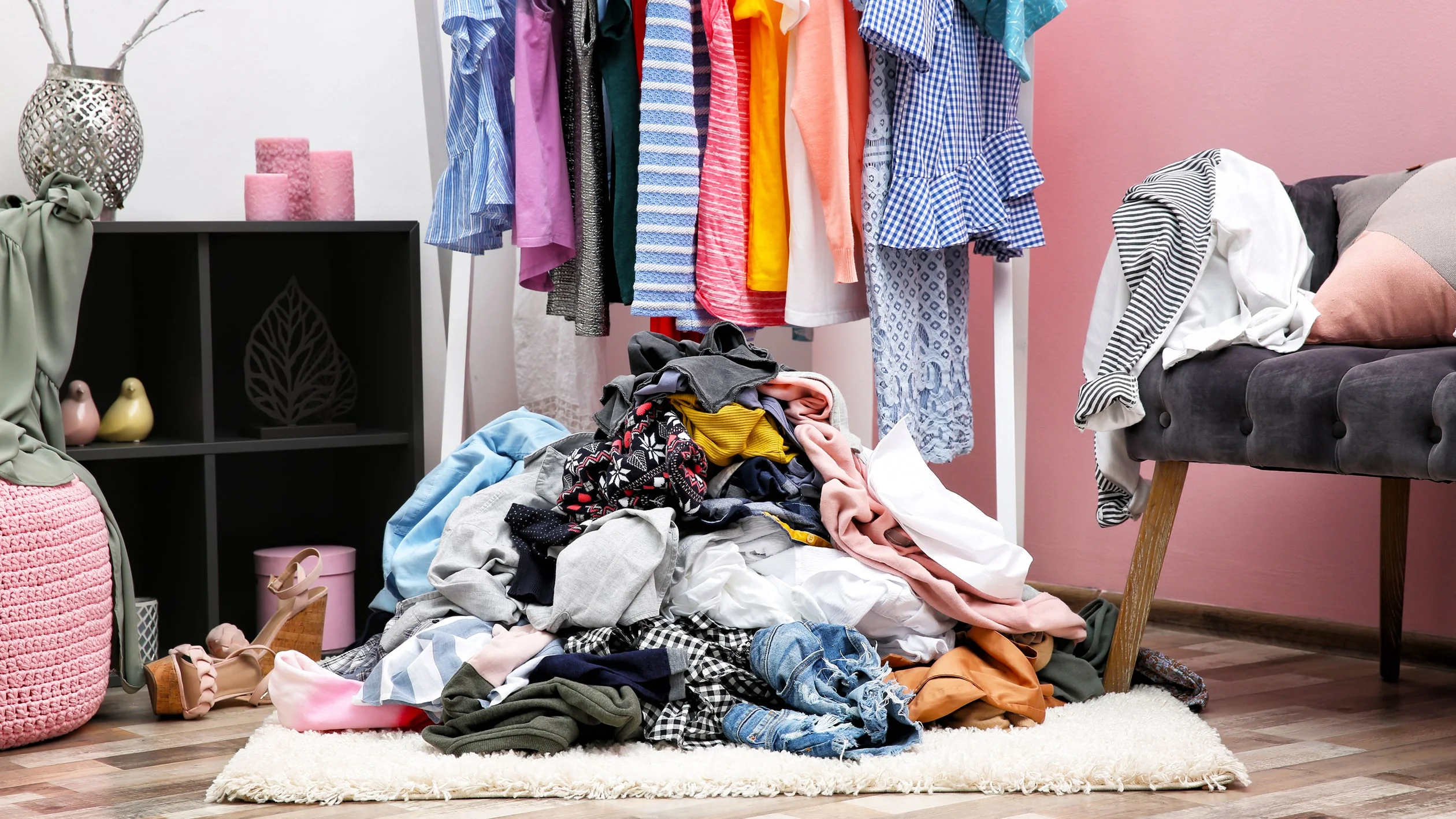
The problem isn't the used clothing or secondhand items themselves. The problem is the psychology.
We’re caught in a "guilt-free trap." The rise of secondhand fashion and the push for a circular economy has given us a powerful psychological permission slip to keep consuming, all while feeling like we're the good guys. It's a classic case of what psychologists call 'moral licensing,' and it's being amplified by the very platforms designed to help.
This trap has two main parts.
Look, we know that trying to shop sustainably feels like an uphill battle sometimes. Our brains naturally want the easiest option, and frankly, the modern global fashion industry is built to take advantage of that lazy streak.
'Moral licensing' is a sneaky psychological trick our brains play on us. It works like this: "I was 'good' (I bought a secondhand top), so now I've earned a 'reward' (I can buy that new dress from an ultra fast fashion brand — a real fast fashion splurge — without feeling bad)."
One "ethical" act (our version of ethical consumption) gives us the mental permission to make several "unethical" ones. We use our good deeds to "offset" our splurges. The result? We don't actually reduce our overall clothing consumption; we just balance the guilt.
And here is where it gets tricky. Back in the day, impulse-buying those cheap garments from big fast fashion retailers usually came with a side of guilt. You'd think, "Ugh, this is so wasteful. What will I even do with this in six months?"
Now, online marketplaces and donation bins have given us an "escape hatch." Our subconscious thought has become:
"It's fine. I'll wear it once for the party, and then I'll just resell it. I'm not throwing it away, I'm giving it a 'new life'!"
This is the 'guilt-free' trap in action. The ease of "ethically" getting rid of an item has become a green light for even more mindless overconsumption. We're no longer afraid to make 'bad' purchases because the consequences (clutter, guilt, and broader environmental issues like huge amounts of waste) feel temporary and, somehow, not our problem anymore.
And this brings us to the online platforms we all 'live' on. Listen, apps like Depop and Vinted are brilliant tools for extending the life of garments. But it's worth pausing for a second to look at how they're designed to work.

Price drop notifications. 'Trending items.' Algorithms that learn your personal style too well and feed you an endless scroll of temptations. Buy-now-pay-later options at checkout. Sound familiar?
This new wave of digital thrifting, especially for younger generations, is often built on the exact same triggers (and business models!) as fast fashion retailers. They're pushing the same dopamine buttons—the thrill of the hunt, the high of a bargain, the fear of missing out. It has inadvertently made secondhand just as fast as fast fashion.
We aren't trying to blame the apps here. We just need an honest reality check on how we're using them. Too often, they become a high-speed revolving door for clothes, rather than a way to build a library of pieces we'll actually keep.
Okay, let's be super clear: Secondhand shopping is amazing. It genuinely plays a crucial role in getting us closer to a sustainable future and that circular economy everyone talks about. When you choose second hand clothing, you're actively keeping huge amounts of textile waste out of the ground. You're helping cut global carbon emissions, reducing water pollution, and slowing down resource depletion caused by churning out new clothes. It's big stuff.
The problem isn't the secondhand fashion market or the push for circular textiles. The problem is our fast fashion mindset. We are using secondhand not as a conscious alternative, but as a psychological 'get out of jail free' card to keep consuming without guilt.

Since the problem is mostly in our heads, the fix has to start there too, with mindfulness and actual sustainable practices. We aren't saying you should ban yourself from shopping. We just need to get a little smarter — and brutally honest — with ourselves.
First, let's just be honest. We have to admit that "I'll just resell it" isn't a real sustainable fashion solution or the best way to embrace sustainable practices if it's just fueling a constant cycle of buying. Reselling is great, but it often just postpones the problem, pushing used garments further down the supply chain — sometimes to developing nations in the global south that are literally choking on our discarded second hand clothing and waste. These are real social impacts we can't ignore.
Next time you're in a thrift store or scrolling a brand's site, try a literal pause. Ask the hard question: "Is this a 30-wear love affair, or just a boredom buy?" Considering your personal environmental impact means looking at how much you buy, not just what you buy. Taking that pause is a crucial role only you can play.
The research shows that most of us will still buy new clothes to mix with our secondhand purchases. And that's okay! The goal is progress, not perfection.
But here’s the key: don't use the 'moral license' from your last thrift haul to justify a mindless new purchase.
Instead, make this new purchase the conscious one. This is what Aloto was built for. Before you buy, check the brand's rating. We partner with Good On You to give you a clear, simple score based on how brands treat People (including their entire supply chain), the Planet, and Animals.
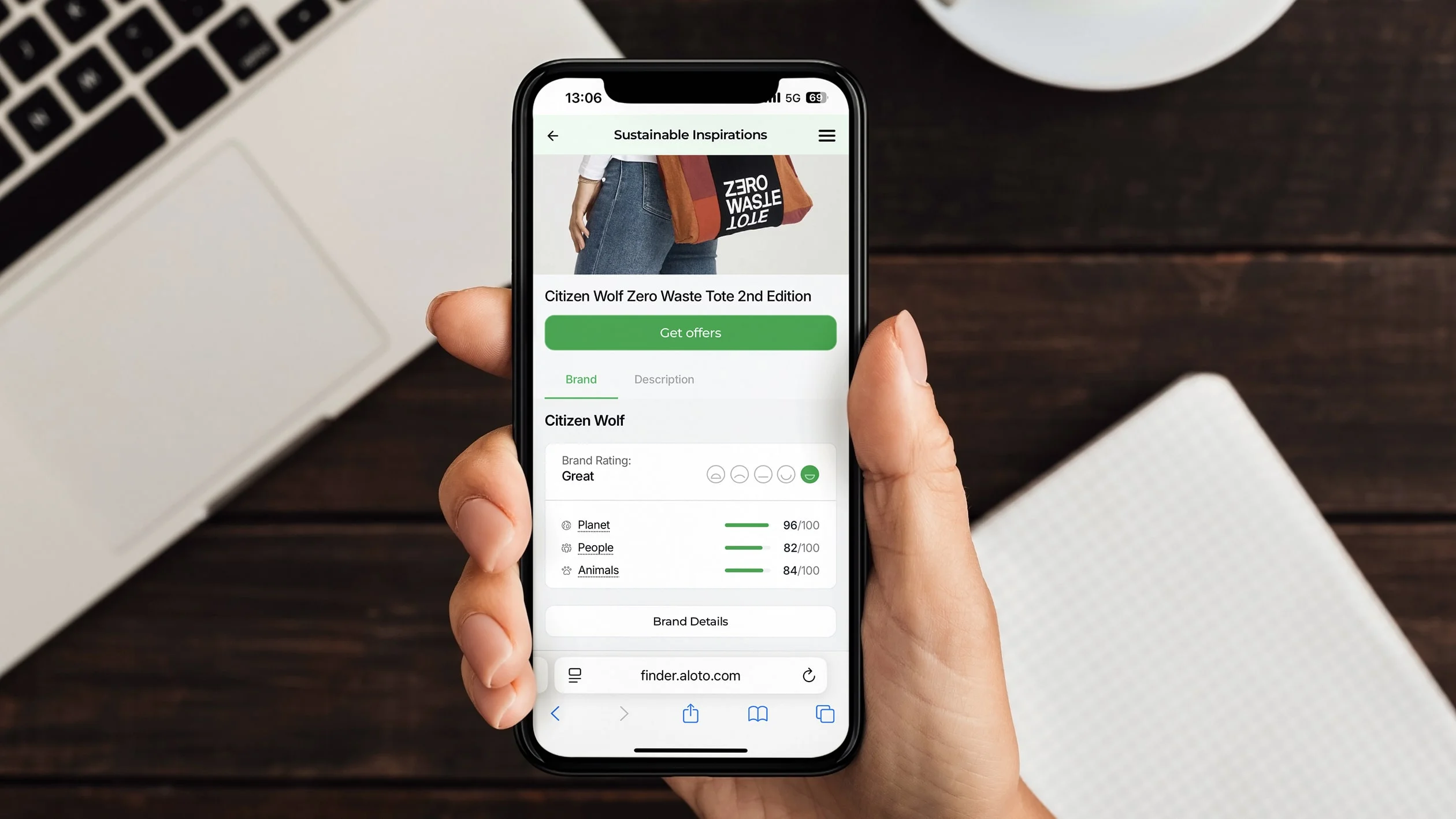
Choosing a brand rated 'Good' or 'Great' is true 'guilt-free' shopping and a core part of ethical consumption. It's a choice that stands on its own and doesn't need to be 'offset' by another action.
True sustainable fashion isn't about trying to 'cancel out' our bad purchasing decisions with good ones. It's about making fewer bad purchasing decisions altogether.
The fast fashion second hand relationship is complex, but the solution is surprisingly simple: Change the mindset, not just the marketplace.
Let's embrace sustainable practices in a way that actually works. Let's keep loving secondhand shopping for the thrill of the hunt and the joy of the find. And when we do buy new, let's use Aloto for the peace of mind that comes from knowing we're supporting a brand that aligns with our values.
Ready to see what conscious brands look like? Take Aloto for a spin and build a wardrobe you truly love.